


A quick note: I first wrote a version of this reflection about a year ago, simply sharing how journalling had helped me process some of the thoughts I was carrying. Next week, I’ll be releasing a broader resource as part of our Collective Wisdom series, drawn from a roundtable conversation with others who approach journalling in different ways. Before sharing that, I wanted to revisit this piece and offer the more personal side of why journalling has mattered to me.
Prefer to listen? I’ve recorded an audio version of this reflection below.
One of the more difficult challenges I’ve found when tough times come is the battle I face on the inside.
Most people see what’s happening on the outside. They see the circumstances, the events, the diagnosis, the loss, the decisions, the things that can be named and explained.
But for me, that’s often not the hardest part.
The harder battle is the one inside my own head.
That’s where words and thoughts crash into each other. That’s where fears grow louder. That’s where questions loop around with no obvious place to land. That’s where confusion can build until I feel flat, overwhelmed, and unsure what to do with all the noise inside me.

Have you ever felt like that?
Like you mind was full, but you couldn’t properly explain why?
Have you ever longed for peace while your thoughts kept pulling you in the opposite direction?
For some people, this happens in the middle of a storm. For others, it feels like a daily battle they can’t quite get on top of. And for some, especially those for whom faith is part of the journey, it can even get in the way of connecting with God. The very place where you want peace becomes crowded with worry, fear, grief, frustration, and unanswered questions.
If any of that rings true, I want to share a practice that’s helped me.
Journalling.
Now, I know the word itself may turn some people off straight away. For some, the idea of sitting down to write about uncomfortable thoughts and emotions sounds awful. I get that. Journalling is not everyone’s natural language.
But it might also be that journalling simply needs a little interpretation. So let me explain what it’s meant for me.
When My Thoughts Needed Somewhere to Go
“Journal writing is a voyage to the interior.”
Christina Baldwin
In some ways, I admit this may be easier for someone like me. I love words. I always have. They help me make sense of what I’m feeling about the world around me.
I use a lot of words. Just ask my friends.
But I don’t always share all of them with other people.
When my first wife was diagnosed with cancer, I remember going out and buying a blank journal. I don’t remember anyone telling me to do it. I just suddenly felt drawn to write down on the outside what was happening on the inside.
Something in me wanted to take the crowded, unfiltered, unstructured thoughts that were bouncing around in my head and place them somewhere more concrete. Somewhere slower. Somewhere outside of me.
At night, after everyone had gone to bed, I’d often head outside and open my journal. Then I’d begin to write.
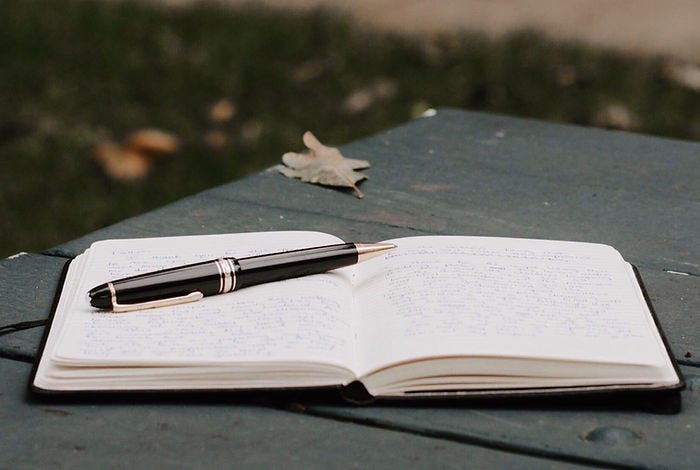
I wasn’t trying to write anything impressive. I wasn’t crafting a blog post. I wasn’t trying to sound spiritual or wise or emotionally together. I was just trying to take some of the private thoughts that had been occupying my mind all day and share them with this quiet companion of mine.
And somehow, it helped.
It became a safe space to share my deepest concerns. It helped me unravel some of the mess that had started to take up residence in my mind. And even if only for a short time, it seemed to reduce the power of those thoughts by putting them down in front of me.
It felt like I was slowing them down.
It reminded me of an exhausted parent finally getting a crying baby to sleep. They know the baby will wake again soon, but for those few quiet moments, a little bit of sanity returns.
That’s what journalling sometimes gave me.
No one else saw what I wrote, so it felt safe. I could write about fear, anxiety, confusion, sadness, disappointment, anger, questions, and anything else that was sitting heavily inside me.
Nothing was out of bounds.
Nothing was too shocking.
Nothing had to be hidden.
There was no guilt. No judgement. No motivational speech telling me everything would work out, that it would all make sense one day, or that I simply needed to be stronger.
My journal didn’t interrupt me. It didn’t correct me. It didn’t look uncomfortable when I was honest.
It simply gave me somewhere to be real.
A Place to be Honest with God
Over time, journalling became more than a place to process my thoughts. It also became another way I could talk with God. I still prayed, but sometimes speaking out loud felt hard, awkward, or strangely lonely, especially when it felt like he wasn’t talking back.
Writing gave me another way to bring my fears, questions, and longings before him.
“It’s a place where I can be myself with God and just be real. Pour out my heart… it’s a safe place for me to talk to God and to hear from God and apply that to my life.”
Graham Humphris
one of the contributors to the upcoming Collective Wisdom conversation on journalling
Sometimes I’d write honestly about those fears. Sometimes I’d simply ask questions. Sometimes I’d tell God I was disappointed that he hadn’t stepped in yet, or afraid that he wouldn’t step in the way I desperately wanted him to.
Sometimes I’d just reflect on a Bible verse I’d read or sit with an idea, a question, or a phrase that seemed to be speaking to me.
And then, somewhere along the way, I started ending each of my journal entries with a written prayer. I’d take all the fears, pain, ideas, hopes, and confusion I’d just written about and hand them to God.
I could have prayed those words out loud, and sometimes I did. But writing them down felt different.
It wasn’t always pretty. It wasn’t usually long. And sometimes all I could write was: “Father, please help. I need you. Amen.”
But even that mattered.
There Isn’t One Right Way to Journal
One of the things I’ve come to appreciate about journalling is the freedom of it.
There are times I write, times when I doodle. Sometimes I draw a messy mind map or scribble out words that don’t quite make sense yet. Other times I write out a Bible verse and circle one word or phrase that stands out to me.
“You’re not writing to write a particular way, or it has to be a particular time… you do what works for you. But I think over time when you just start doing it… you actually get to know yourself and you just write to you.”
Lynne Kooij
one of the contributors to the upcoming Collective Wisdom conversation on journalling
And then there are times, especially when I’m in a lot of pain, I try to slow my spiralling thoughts by naming just one small thing I’m grateful for.
Not ten things. Not some big, impressive list. Just one.
Sometimes that one thing leads to another. Sometimes it shifts my mood a little or it lifts my eyes just enough to see that not everything is dark, even if life still feels heavy.
Sometimes I write a question down that hasn’t yet found an answer.
And some of those questions are still sitting there.
That’s okay too.
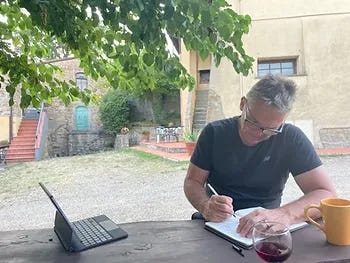
Writing things down in a notebook helped me through some of the darkest times of my life, but this habit has stayed with me when the light has started to return. It’s become a place of honesty, reflection, prayer, gratitude, and sometimes just quiet companionship.
When I began blogging through Resilient Souls and writing down some of these reflections, I added a section called “From Reflection to Action” with practical suggestions for readers. I noticed that I often encouraged people to write things down in a journal.
That came out of an assumption based on my own experience.
You see, journalling had become so important to me that I found myself recommending it to others who were carrying heavy things too - whether they were people who wrote things down or not. And that got me thinking.
As a result of that thinking, next week, I’ll be releasing a Collective Wisdom resource that expands this idea beyond my own experience. I invited a small group of people to sit down to talk about why they journal, how they approach it, and the different ways it’s helped them process life, faith, grief, things they’re thankful for, and the thoughts that can otherwise stay tangled inside.
What I loved about that conversation is that no one approached journalling in exactly the same way.
That’s part of the encouragement.
There isn’t one perfect method. There are simply different ways of giving your thoughts somewhere safe to go.
For now, maybe this is enough:
your thoughts deserve somewhere safe to land.
Questions to Reflect on.
What thoughts, emotions, or questions have been taking up the most space in your mind lately?
When those thoughts stay inside, what effect do they have on your mood, your body, your relationships, or your ability to feel at peace?
Where do those thoughts usually go, and in what ways could it help to have a safer place to put them?
From Reflection to Action:
(These are just suggestions – maybe choose 1 or 2 to try)
If you’ve never tried journalling, or if you’ve tried and stopped, here are a few simple ways to begin. But before we get to those, here’s something helpful from Nate Vawser, one of the guests in next week’s Collective Wisdom resource.
“If you set out to try and do this every single day for weeks on end, you are going to fail, and then you’ll be discouraged about that. So don’t… just try three times… or let yourself off the hook a bit and say, I’ll just try this once with no expectation about where that’s going to go.”
Nate Vawser
one of the contributors to the upcoming Collective Wisdom conversation on journalling
Find a journal that feels right for you
It could be blank, lined, guided, small, large, cheap, beautiful, plain, or practical. There is no correct version. Choose something you will actually want to open.Choose a place to begin
It might be a chair in your house, a table outside, a local coffee shop, a park, or even your car before you walk into work. Some people like a regular place and time. Others need it to stay flexible. Both are fine.Start small
You don’t need to write pages. Begin with one sentence if that’s all you have.“I find taking all the rules away is really helpful for me… usually it is just that getting out what’s in my head, stream of consciousness. Sometimes it starts really boring… and that kind of helps me to get started. And often then that goes deeper from there.”
Hannah Kallady
one of the contributors to the upcoming Collective Wisdom conversation on journallingYou could start with:
“Right now I’m feeling…”
“The thought I can’t seem to shake is…”
“God, I don’t know what to do with…”
“One thing I’m grateful for today is…”
Write honestly
Don’t worry about spelling, grammar, neatness, or whether it sounds good. This is not a performance. It’s meant to be a safe place to start processing. You can write, draw, scribble, list, pray, or simply get one thought out of your head and onto the page.You might feel lighter. You might feel clearer. You might feel the power of your struggles reduced a little as they sit there in words in front of you.
Or you might feel nothing.
That’s okay too.
End gently
If faith is part of your life, you might like to finish by writing a simple prayer. Hand what you have written to God.It could be as simple as:
“Father, please help me with this. Amen.”
If faith is not part of your framework, you might simply take a deep breath and notice whether anything feels a little clearer than when you began.
💡 Tune into stories that help you process life more honestly.
Listen to real stories of resilience, faith, grief, hope, and what has helped people keep going through difficult seasons on the Resilient Souls podcast.This is just a start. Next week’s Collective Wisdom resource will offer a wider range of ideas, approaches, and suggestions from others who have found journalling helpful in different ways.
Bible Verses for Processing Your Thoughts With God
Psalm 62:8 (NLT): “Trust in him at all times, you people. Pour out your heart in his presence. God is our refuge.”
1 Peter 5:7 (NIRV): “Turn all your worries over to him. He cares about you.”
Philippians 4:6-7 (NLT): “Don’t worry about anything; instead, pray about everything.”